
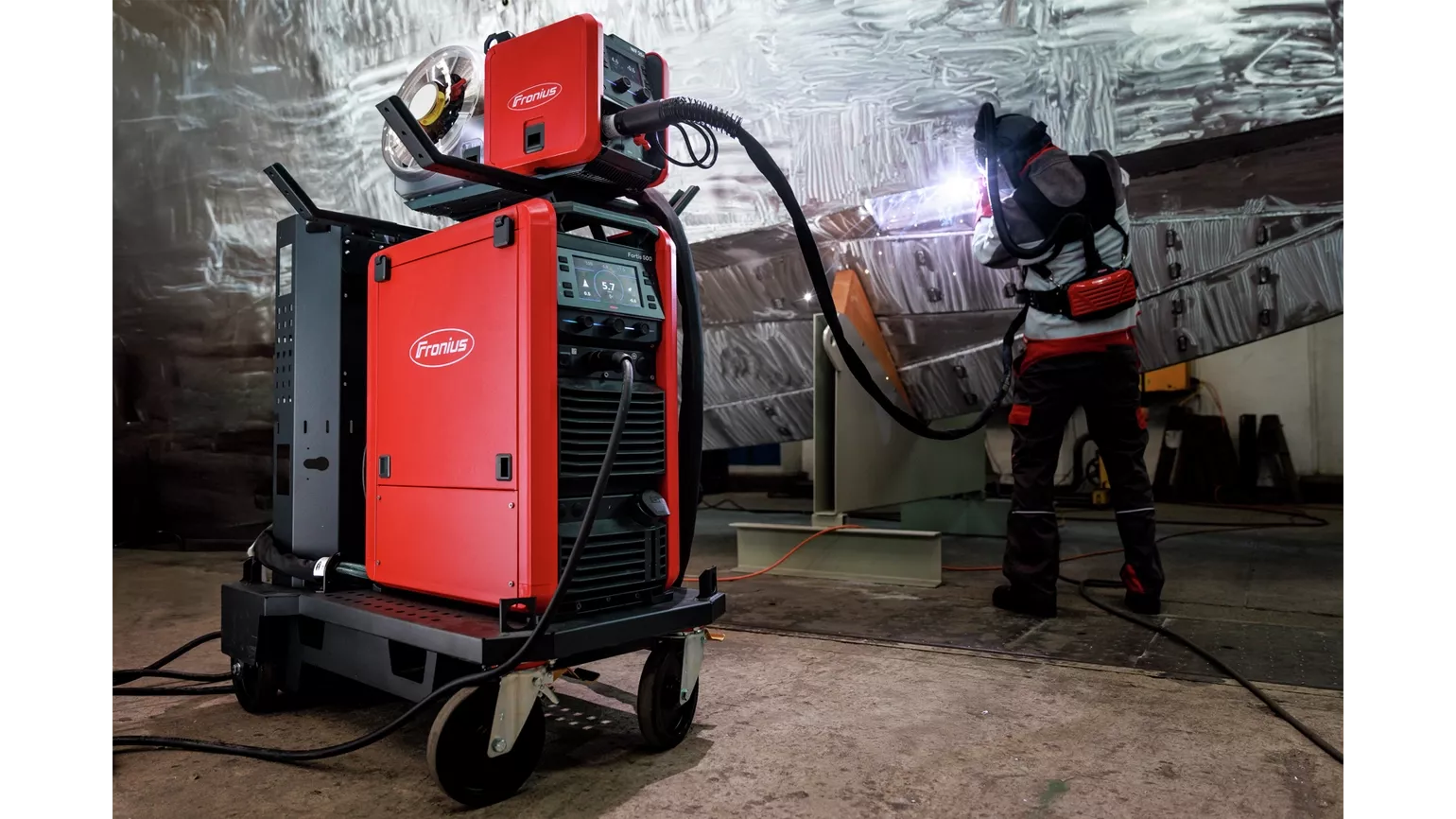
Pulse welding comes up in almost every conversation we have about new MIG and TIG machines. It sounds technical, but the idea behind it is simple, and once you understand it you can see why so many fabricators now choose a pulse machine.
Two current levels instead of one
A conventional welding machine holds the current at one steady level. A pulse machine switches it between two levels, many times a second:
- Peak current: a high level that melts the wire (or the parent metal, in TIG) and does the work.
- Background current: a low level that keeps the arc alight and lets the weld pool cool slightly between pulses.
- Frequency: how many times per second the machine switches between the two.
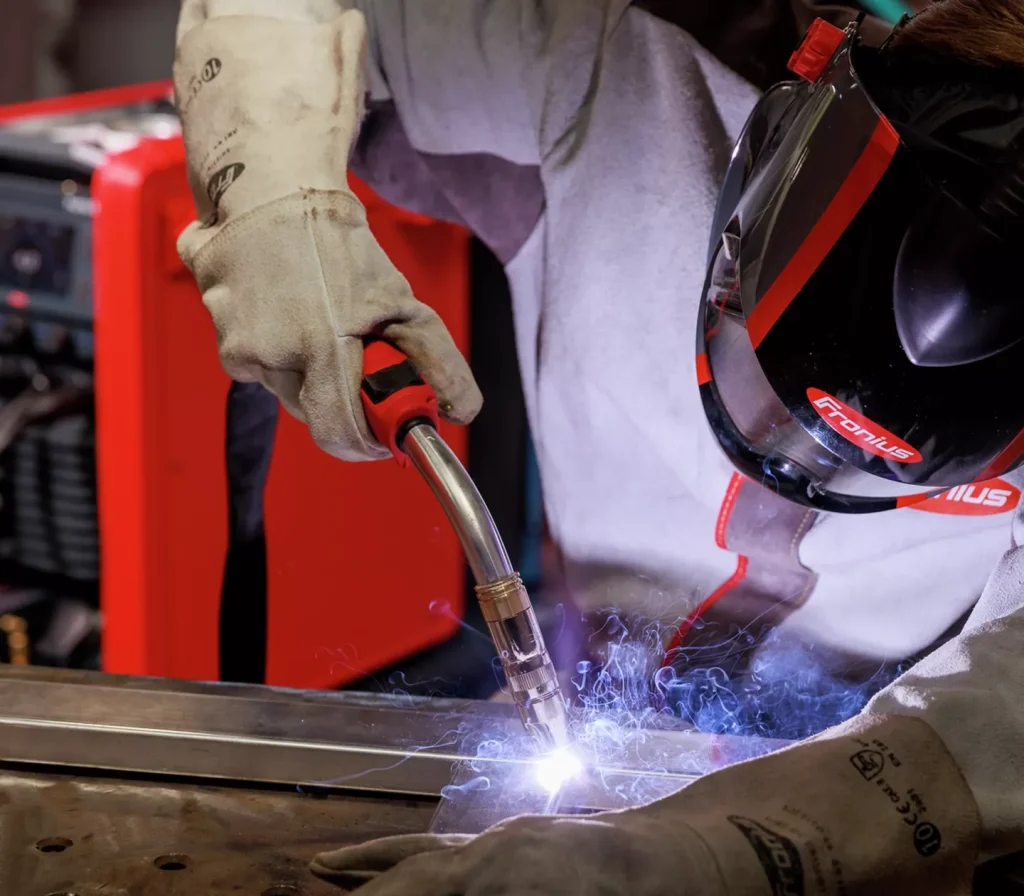
In pulse MIG, each pulse is timed to pinch off a single droplet of filler metal and fire it across the arc into the pool. That gives you a spray-type transfer at much lower average currents than a conventional spray arc needs.
A simple worked example
Say the machine pulses between a peak of 100 A and a background of 50 A, spending the same time at each level. The average (mean) current is:
(100 A + 50 A) ÷ 2 = 75 A
You get the melting and penetration of the 100 A peak, but the mean current is 75 A. At the same voltage and travel speed, that is 25% less heat going into the job than welding at a steady 100 A.
Real pulse MIG waveforms use much higher, shorter peaks and the machine controls them very precisely, but the principle is exactly the same: high current when it is needed, low current the rest of the time.
Why it matters
- Less spatter and less grinding afterwards. See Pulse MIG: less spatter, less clean-up.
- Better-looking welds on aluminium. See TIG-like aluminium welds with pulse MIG.
- Less distortion on thin sheet. See Welding thin sheet without distortion.
- Better control with stick electrodes. See Pulse MMA: better gap bridging and bead shape.
- Lower heat input, which helps the mechanical properties of the joint. See Why heat input matters for weld strength.
You don’t have to set the pulse parameters yourself. Modern machines such as the Fronius Fortis do it for you with synergic programs, which we explain in Fronius synergic pulse programs: plug and play.
Talk to us
Not sure whether pulse is worth it for your work? Tell us what you weld and we’ll give you a straight answer. Call 0141 959 5666 or email info@weldsafe.co.uk.
Images © Fronius International GmbH.