
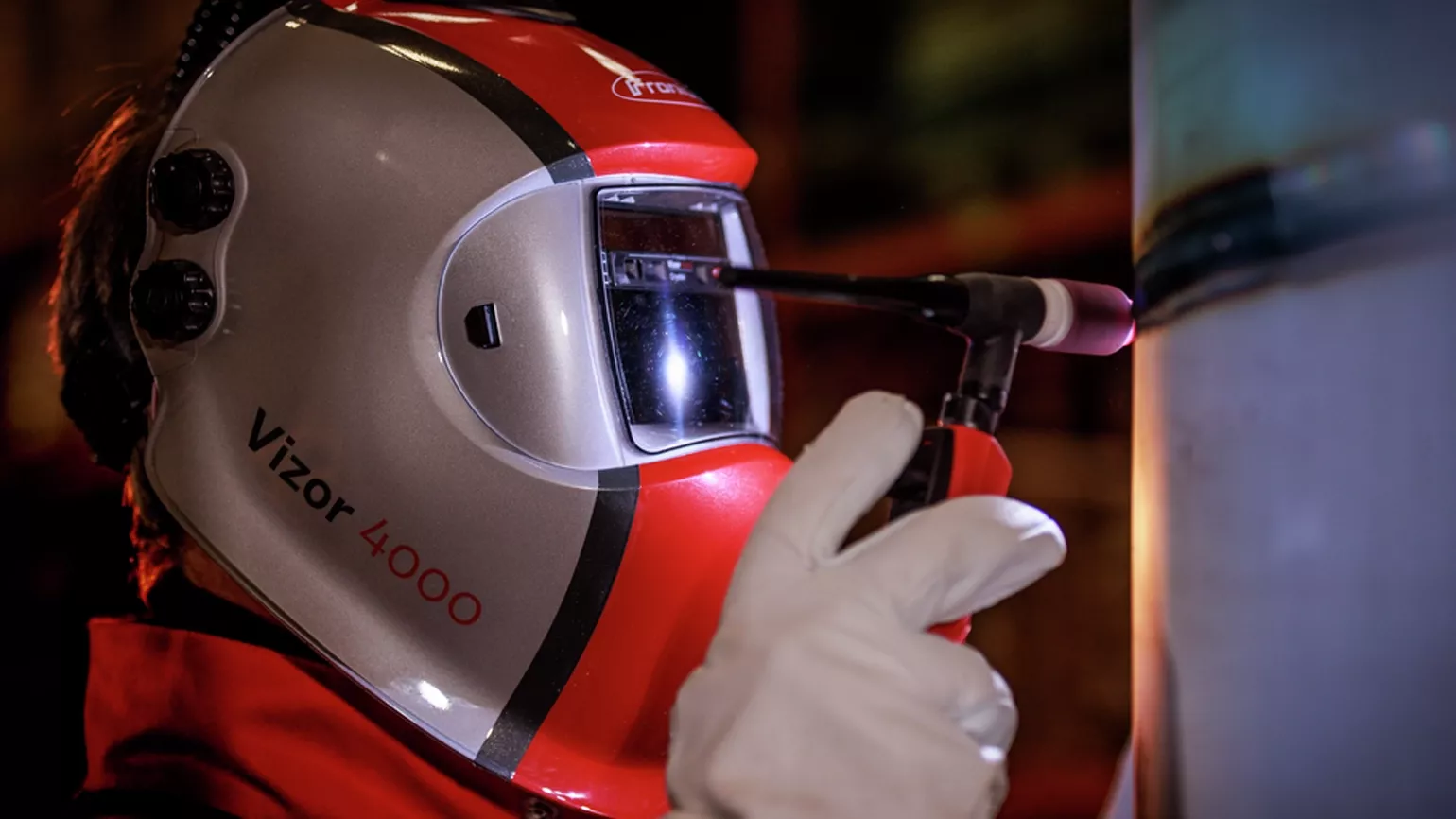
Anyone who has welded thin sheet knows the problem: the weld looks fine, then the panel bows, twists or “oil-cans” as it cools. Distortion costs time in straightening, and sometimes the part has to be scrapped.
Why thin sheet distorts
Welding heats a narrow strip of metal, which expands. As it cools it shrinks, and that shrinkage pulls the surrounding material out of shape. The more heat you put in, and the wider the heated area, the more it moves. Thin sheet has little stiffness to resist that pull, so it shows distortion first.
How pulse helps
Pulse welding lowers the average heat input while keeping enough peak current to fuse the joint properly. In our simple example, pulsing between 100 A and 50 A gives a mean of 75 A, roughly 25% less heat than a steady 100 A at the same voltage and travel speed.
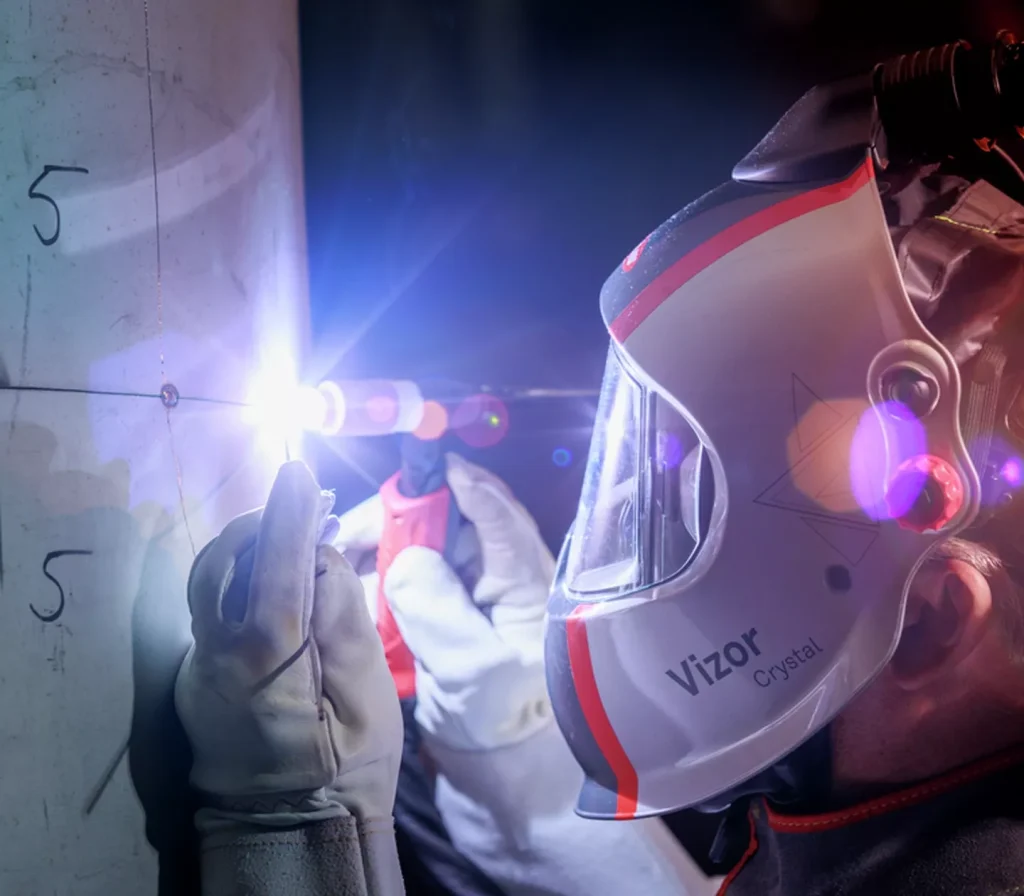
- Pulse TIG: the peak current melts a spot of the joint, and the background lets it partly freeze before the next pulse. You get a series of overlapping spots, good control of penetration and less burn-through on thin material.
- Pulse MIG: spray-type transfer at a low mean current means you can weld thin sheet fast without the spatter of short-arc, and faster travel also reduces heat input.
Other ways to keep sheet flat
- Tack well and evenly, and work from the middle outwards.
- Use stitch (intermittent) welds where the design allows. The Fronius Fortis has a stitch welding function for exactly this.
- Balance welds on both sides of a neutral axis, and back-step on long seams.
- Clamp to a solid table or use copper or aluminium backing bars to draw heat away.
- Don’t over-weld: a bigger fillet than the drawing asks for only adds heat and distortion.
TIG pulse is standard on the Fronius Fortis (TIG DC) and on Fronius TIG machines such as the iWave 230i AC/DC, which also handles aluminium on AC.
Talk to us
Struggling with distortion on a particular job? Send us the material and thickness and we’ll suggest a process and settings. Call 0141 959 5666 or email info@weldsafe.co.uk.
Images © Fronius International GmbH.